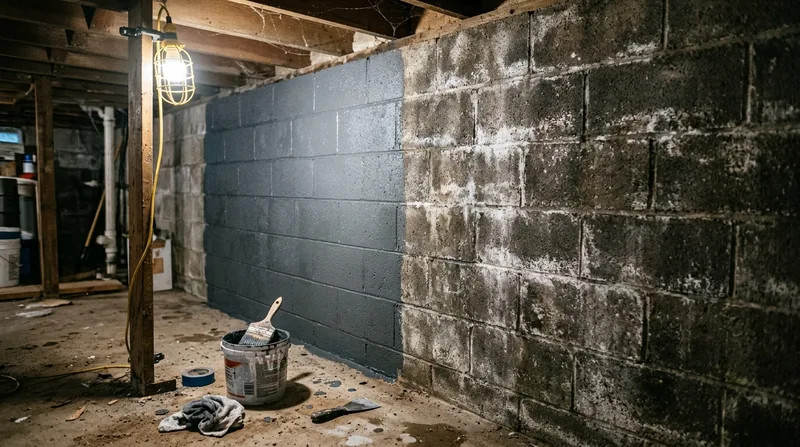




If your Evansville basement walls sweat through humid summers or weep after spring thunderstorms, Basement Wall Sealing in Evansville is the first step to drying them out. The city sits on Ohio River silt and clay over glacial deposits, with loess silt on the uplands, and low lots near the river hold the water table close to the surface. In Jacobsville and the older east side, 1890s to 1930s brick and stone basement walls have been taking that moisture for a century. Out in Oak Hill and Bel Air, 1930s to 1960s bungalows and Cape Cods sit on slopes where freeze-thaw swings open hairline cracks every winter. We prep the wall, strip the efflorescence, and apply a penetrating or membrane sealer that actually bonds to the masonry. If the real problem is hydrostatic pressure, we tell you straight and point you to basement waterproofing instead of selling you a sealer that will fail.
Why Evansville Basement Walls Leak and What Sealing Actually Fixes
Evansville's dominant failure mode is water pushed through porous masonry by hydrostatic pressure during spring rains and heavy summer thunderstorms. The 1937 flood still shapes how the riverfront is built, and low lots near Pigeon Creek keep groundwater close to the surface year round. Old brick and early block walls in Downtown and Jacobsville wick that water inward, leaving white efflorescence and a musty smell. Sealing handles the dampness that comes from vapor drive and surface porosity, not the water column pressing from outside.
- We remove efflorescence and loose parging so the sealer reaches sound masonry.
- We fill hairline cracks and tie them into the sealer coat where movement is not structural.
- We identify when wall seepage is really a footing drain problem and say so before you spend money.
- We recommend a dimple board or vapor barrier where interior moisture is the main source.
Getting that diagnosis right is the difference between a dry wall and a callback, which is why we inspect before we quote.
Key info: A 1920s brick basement in Jacobsville with white powder on the walls and a musty smell is a sealing candidate. The same wall with water running at the base after a storm is a hydrostatic pressure problem, and an interior drain tile system is the honest answer.
Indiana homeowners can verify contractor licensing and local permit requirements through the Indiana Professional Licensing Agency and the Evansville building department before any work starts.
How We Seal Basement Walls in Evansville, Step by Step
We start with a free inspection of the wall, the floor joint, and the grading outside. On poured-concrete basements in the newer north and east subdivisions, we check for shrinkage cracks and cold joints. On brick and stone walls in the older neighborhoods, we check mortar condition and whether the wall is bowing. The sequence below is what a typical sealing job looks like.
- We walk the basement and mark every damp patch, crack, and efflorescence bloom.
- We wire-brush and scrape the wall to bare, sound masonry and remove failed parging.
- We treat efflorescence with a masonry cleaner and let the wall dry to spec.
- We fill non-structural cracks with hydraulic cement or epoxy injection where appropriate.
- We apply the penetrating sealer or membrane coat in the recommended number of passes.
- We check the exterior grading and downspout extensions so water moves away from the wall.
Every step is documented so you know exactly what went on your wall and why.
Local example: A 1950s brick ranch in Oak Hill had efflorescence on the north wall and a musty smell every July. We cleaned the masonry, sealed the wall, and extended two downspouts. The wall stayed dry through the next spring. A 1920s home near Pigeon Creek with water at the floor joint got a different recommendation: interior drain tile, because sealing alone would not have held.
Sealing Methods We Use on Evansville Basement Walls
Not every wall takes the same product. Cinder block and old brick behave differently from poured concrete, and a wall with active seepage needs a different approach than a damp but stable one. The table below shows the main options and where each one fits.
| Approach | Description | Best for |
|---|---|---|
| Penetrating sealer | Sinks into the masonry and reacts to block water vapor without a surface film. | Damp brick or block walls with efflorescence and no standing water. |
| Membrane coating | Flexible cementitious or elastomeric coat that bridges hairline cracks. | Poured concrete with shrinkage cracks and minor seepage. |
| Crack injection | Epoxy or polyurethane injected through ports to fill the full crack depth. | Active leaks on poured walls and cold joints. |
| Dimple board and vapor barrier | Drainage mat and vapor barrier that keep interior moisture off the wall. | Finished basements where condensation and humidity are the issue. |
| Exterior membrane with footing drain | Waterproof membrane and drain tile on the outside of the wall. | Walls with heavy hydrostatic pressure and failed original drain tile. |
We match the method to the wall, not the other way around.
Basement Wall Sealing Cost in Evansville: What to Expect
Most sealing work in Evansville starts around $1,500, and that figure buys wall preparation, efflorescence removal, crack filling, and a quality sealer on a typical basement. The price moves with wall length, how much parging has to come off, and whether cracks need injection before the sealer goes on. A small damp wall on a bungalow in Bel Air lands near the low end. A full perimeter on a large walkout in a newer east-side subdivision with several active cracks runs higher.
Access matters too. A basement packed with storage takes longer to prep, and a wall behind finished framing may need a different approach. If the inspection finds hydrostatic pressure, the honest recommendation is an interior drain tile system, and that is a different budget. Getting two or three estimates is smart because the diagnosis should match across all of them. Our full pricing overview breaks down the ranges.
Basement Wall Sealing Near Me: How to Pick a Contractor Near Evansville
When you search for basement wall sealing near me, the list looks similar on every screen. What separates contractors is the diagnosis, not the ad. Ask whether the company specializes in below-grade work, because a general foundation firm and a plumber will both quote you something, and neither may solve the actual problem. Here is what to check before you sign.
- Confirm the company is licensed and insured and ask for a certificate before work begins.
- Get two or three written estimates that explain the diagnosis, not just a price.
- Ask for references from Evansville or Newburgh jobs with similar wall types.
- Ask who pulls any permit required for structural or drainage work, and verify with the local building department.
- Get the warranty terms in writing, including whether it is transferable.
If a quote promises a dry basement without inspecting the wall, keep looking. You can reach us through the contact page to schedule a free inspection.
Basement Wall Sealing in Evansville: Pricing Guide
| Service | Price | Details |
|---|---|---|
| Single wall sealing | Starting at $1,500 | Includes wall prep, efflorescence removal, crack filling, and one sealer coat on a typical basement wall. |
| Full perimeter sealing | Starting at $2,800 | Covers all basement walls, with price driven by wall length, parging removal, and number of cracks. |
| Crack injection before sealing | Starting at $450 | Epoxy or polyurethane injection for active cracks, priced per crack and by depth. |
| Membrane and dimple board | On estimate | Finished basements need an on-site look to price framing, access, and drainage mat layout. |
| Travel | Included | in Evansville and surrounding areas, no separate call-out or mileage fee |
| Estimate | Free | Response within 24h at (812) 461-1167, no obligation to book |
Indicative pricing, the exact cost depends on square footage, finish, and site access. Free personalized estimate within 24h at (812) 461-1167.


